Lathe Cut Vinyl vs Pressed Vinyl: What Changes
By Dylan AnderPublished November 21, 2026Updated November 21, 2026
Carved versus stamped copies
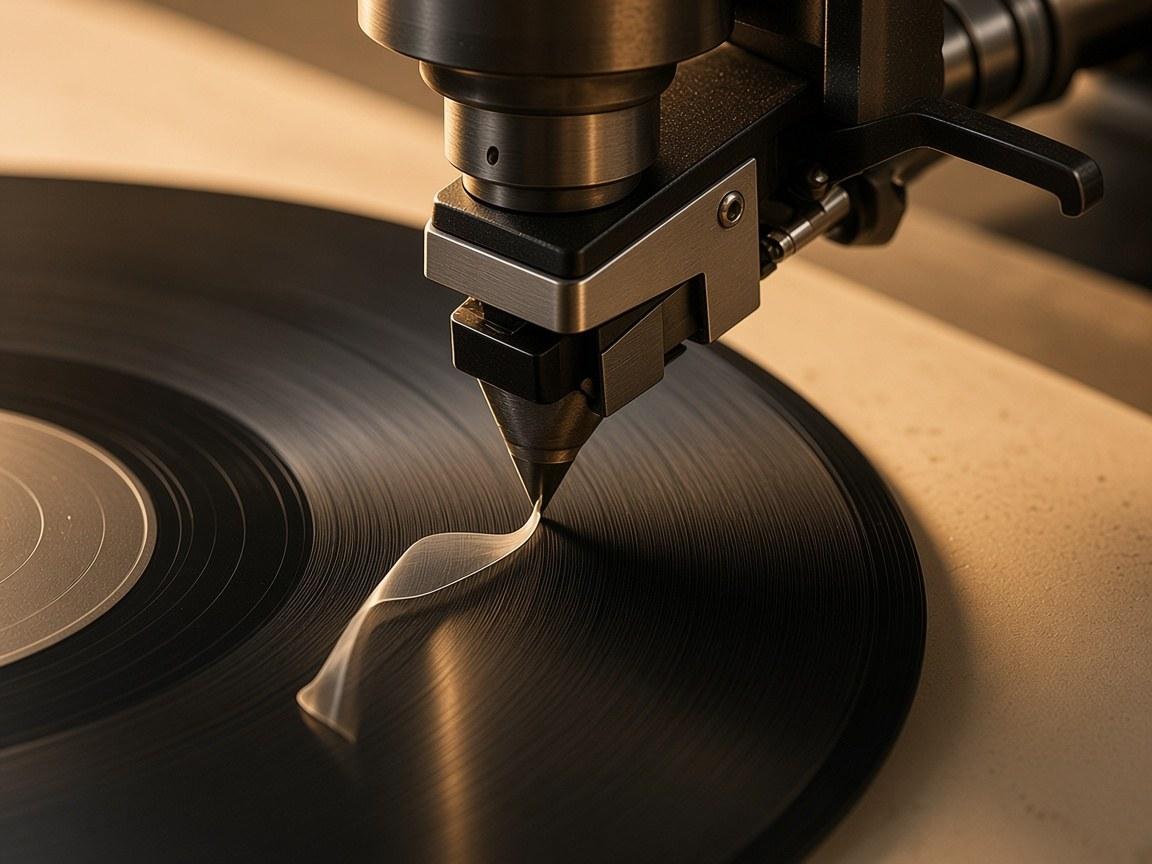
A lathe-cut record has the groove cut directly into the finished disc, one copy at a time. A pressed record is stamped from a metal master, which is why plants usually set a minimum run. Gotta Groove Records, in its glossary of common vinyl terms (checked November 21, 2026), says a lathe is not a record press, and that pressed records are not made from blank discs.
The short answer
Both methods can produce a playable disc. They are not the same manufacturing path. If you want one personal record, shops generally cut it on a lathe. If you want a stack of identical copies, a pressing plant plates a stamper and runs a press. For the factory sequence, see how vinyl records are made.
What a lathe cut is
On a lathe, a cutting stylus carves the groove into the disc that will be played. Vinyl Mixtape Shop describes that process on its lathe-cut records page (checked November 21, 2026): there is no metal stamper, so a shop can cut a single copy. That is why a one-off playlist or gift record is usually a lathe cut rather than a factory pressing.
What a pressed record is
A commercial pressed record starts with a lacquer cut, then plating, then a hydraulic press that stamps copies from a puck of vinyl. Disc Makers walks through those steps on How are vinyl records made (checked November 21, 2026). Because the setup is built for a run, plants usually require a minimum order. Disc Makers lists a 100-unit minimum on its custom vinyl pressing products page (checked November 21, 2026).
Side by side
| Topic | Lathe cut | Pressed record |
|---|---|---|
| Method | A stylus cuts the groove into the disc you play | A stamper presses copies from a vinyl puck |
| Usual run size | One copy, or a small number, because no stamper is required | A plant run, often with a minimum such as Disc Makers' 100-unit figure |
| Unit cost pattern | You pay for each cut, without spreading stamper costs across a large run | Setup is amortized over many identical copies; see the cost guide for published ranges |
| Sound and wear | This page does not have a sourced lab comparison of noise, loudness, or how long each kind of disc lasts in normal use, so it does not rank one method as more durable or better sounding. | |
Which method a one-off custom record usually uses
In the wider market, a single custom record is usually a lathe cut, because a pressing plant is set up for a run. Still Vinyl has not published how it will manufacture a disc you plan in the builder, and this page does not guess. You can still plan a custom record and read what you can customize today.
How to make a vinyl record
How pressed and lathe-cut records are made, with sourced process steps.
By Dylan AnderNovember 21, 2026
Make your own vinyl record
What you can do yourself, what a shop does, and how to plan a copy in the builder.
By Dylan AnderNovember 21, 2026
Custom vinyl record cost
What drives the price of a one-off or pressed custom record, with sourced market figures.
By Dylan AnderNovember 21, 2026
Personalized vinyl records
What you can actually customize today: track list, color, cover, and label text.
By Dylan AnderNovember 21, 2026
Open the record builder to plan a custom record. There is no checkout yet, and we do not state a manufacturing method or a price on this page.
FAQ
- What is a lathe cut vinyl record?
- A lathe-cut record has the groove carved directly into the disc you will play, one copy at a time. There is no metal stamper. Vinyl Mixtape Shop describes that method on its lathe-cut records page, checked November 21, 2026.
- Does a lathe cut sound worse than a pressed record?
- It varies, and this page does not rank one method as better sounding. Playback depends on the cut, the source audio, the playback system, and how the disc is handled. We do not have a lab comparison to cite here.
- Can a lathe cut be played on a normal record player?
- A lathe-cut disc is still a grooved record meant to be played with a stylus. Use a working turntable and handle the disc as you would any other record. This page does not claim compatibility with every player or cartridge.
- Why would someone choose a lathe cut?
- A lathe cut is the usual route when you only need one copy, or a handful, because there is no stamper to make. A pressed run makes more sense when you need many identical copies. Disc Makers lists a 100-unit minimum for vinyl pressing on its products page, checked November 21, 2026.